For journalist Tulip Mazumdar, encountering a medieval birth scroll that offered protection to women in labour recalled a time in her llife when childbirth felt like a violent battle.
Counting, breathing, pushing, praying
Words and poetry by Tulip Mazumdarartwork by Sue Bridgeaverage reading time 6 minutes
- Article

'Flutter of Life' from 'A life in the Womb', oil on canvas, 2024, Artist: Sue Bridge. Source: Sue Bridge. © Sue Bridge / Wellcome Collection.
I remember Karl touching my lips.
Like going into battle
Seeing the medieval birth scroll unfurled for the first time – its imagery of blood, battle, the crucifixion of Christ, and a diamond-shaped wound said to contain 547,500 drops of blood – took me somewhere I wasn’t expecting to go.
It made me think of a period in my own life that I have reflected on often but have never before articulated – or even fully understood – as violent. Brutal, even. Like going into battle.
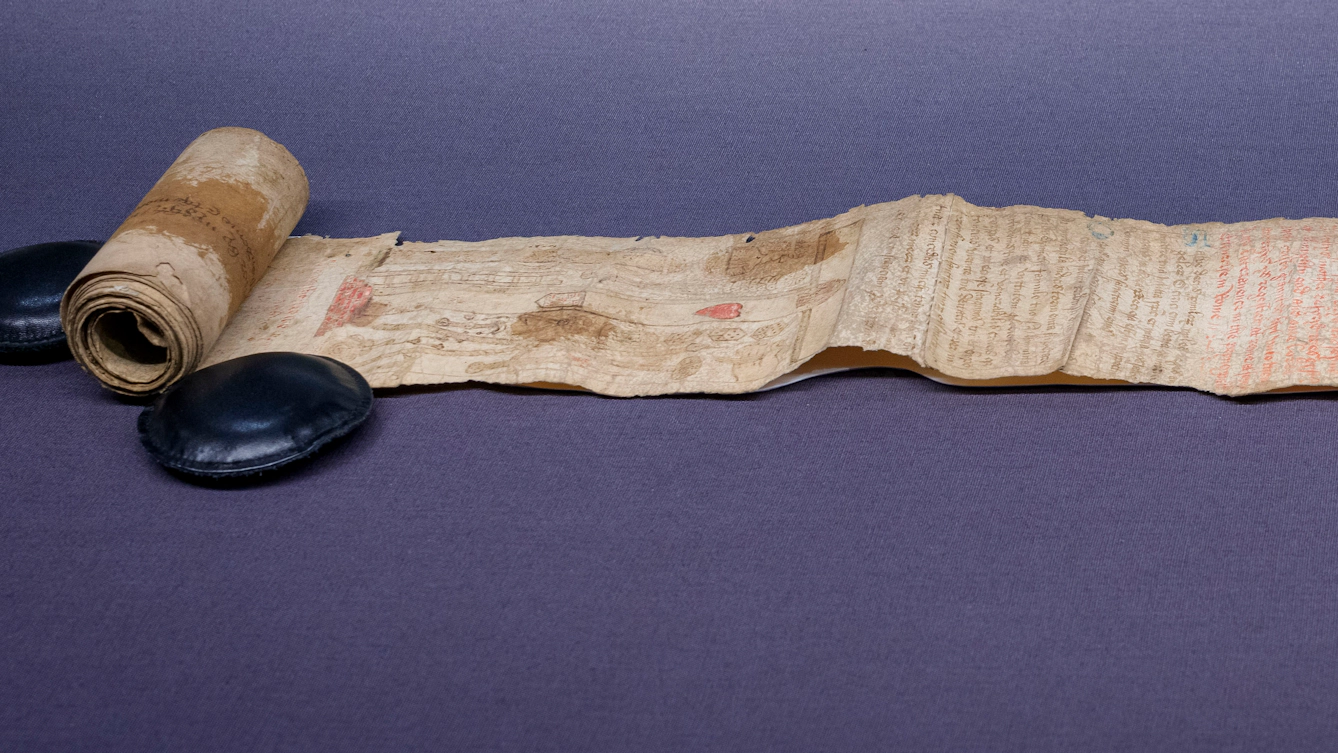
Birth scroll with prayers and invocations to Saints Quiricus and Julitta Saints Quiricus & Julitta, Photographer: Steven Pocock, 2025. Source: Wellcome Collection. © Wellcome Collection. Attribution-NonCommercial-NoDerivatives 4.0 International (CC BY-NC-ND 4.0).
The medieval birth scroll on display at the 'Expecting' exhibition at Wellcome Collection. The scroll contains images representing the crucifixion and suffering of Christ interspersed with prayers and invocations to God for protection during war, and illness, as well as childbirth.
Between 2018 and 2022, I was pregnant six times.
I gave birth four times.
And I now have two happy, healthy children.
But during that period, I lost two pregnancies early on.
Then two baby boys later in pregnancy.
It was during the birth of my son Rae that I suffered my first haemorrhage. And then, when I gave birth to my daughter, I lost half the blood in my body. I needed seven blood transfusions and spent several months recovering from an extremely painful intimate injury. But we both lived, and I got to take her home. How fortunate we were to be in the year 2022 and cared for at a major London teaching hospital.
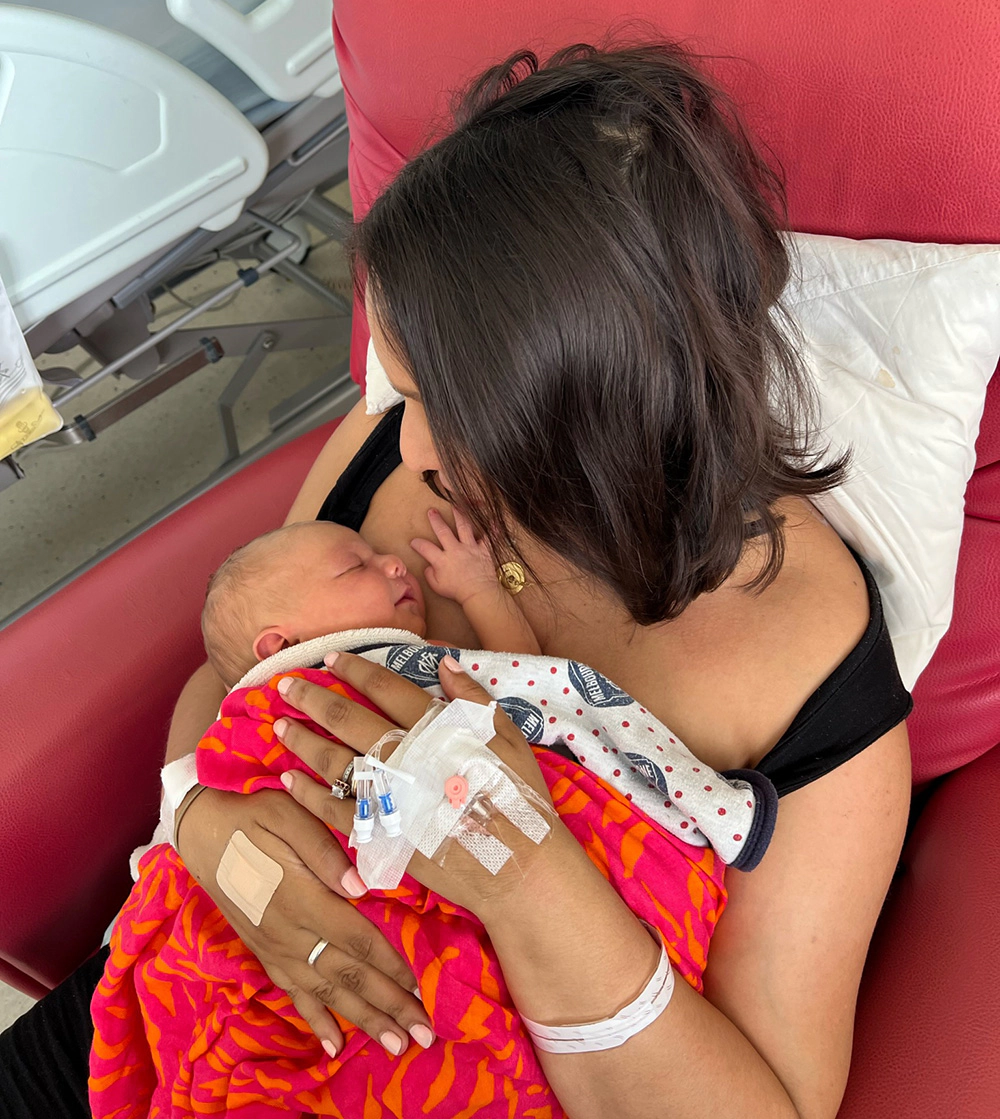
Image copyright: Tulip Mazumdar.
Tulip with her daughter Lilli, in hospital, soon after giving birth.
But even in the 21st century – despite all the expertise around me – those labour rooms were a type of battlefield. My armour a thin cotton gown, gaping open at the back.
It was a time when I longed for protection. For safety. For some divine guarantee that everything would be OK. No one, not even the world’s top doctors in the wealthiest countries, can give you that.
So when I look at the birth scroll, I understand instinctively how precious and powerful it must have been to those women 500 years ago, and what it continues to represent today.
Vessels of hope
Whether the year is 1500 or 2026, we continue to ask women to accept a level of risk that few other areas of medicine would tolerate – to put their lives on the line to bring life into the world.
And when no one can promise that you and your baby will come out alive and well on the other side, the appeal of divine intercession is obvious: a strip of parchment wrapped around your body, marked with patron saints of childbirth, with images of Christ’s suffering in solidarity with your own, and prayers of protection pressed against your skin.
I had my own versions of this ancient vessel for hope…
A heart-shaped rose quartz, smooth and cold as I rolled it between my fingers – a stone long associated with love, healing and protection.
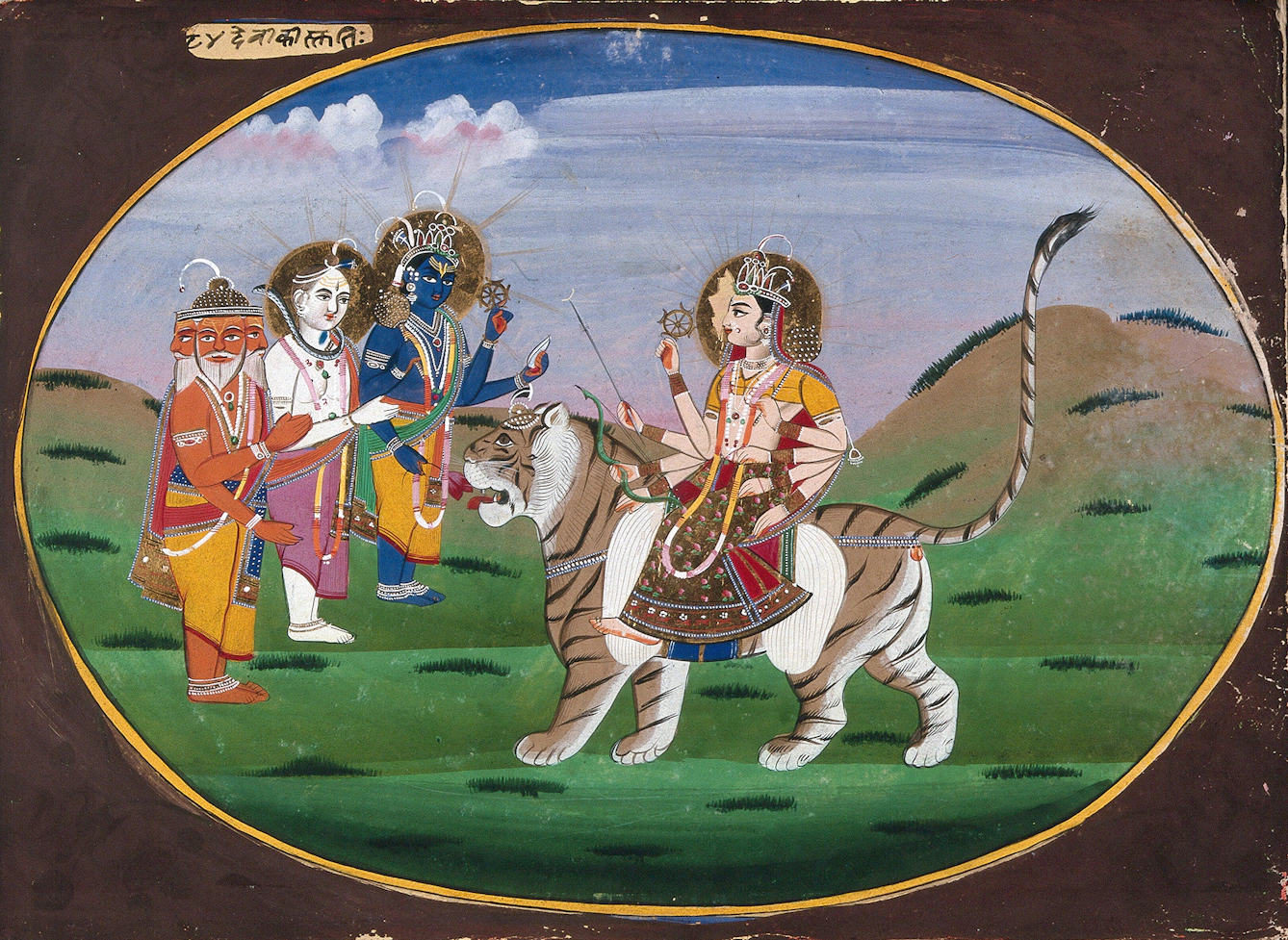
The Hindu goddess Durga boldly facing the triumvirate of major hindu gods: Vishnu, Shiva and Brahma (the Trimurti).
A photograph of my mother. And within that – in the strange, drifting hallucinations brought on by pain relief – an image of the Hindu warrior goddess Ma Durga, seated upon her tiger, spear in hand. A mother. A fighter. Riding into battle to protect the cosmic order.
When there is so much to lose, even a non-religious person can find comfort in the promise of strength and protection from the gods.
As many women who have given birth will know, labour can feel like entering another universe. You are at your most base, most vulnerable – often on your hands and knees, literally and figuratively.
The outside world disappears. Time shifts. You move into a dreamlike state – sometimes of pain, sometimes of terror, sometimes of extraordinary euphoria – where you are doing what, in that moment, it feels like you were put on Earth to do.
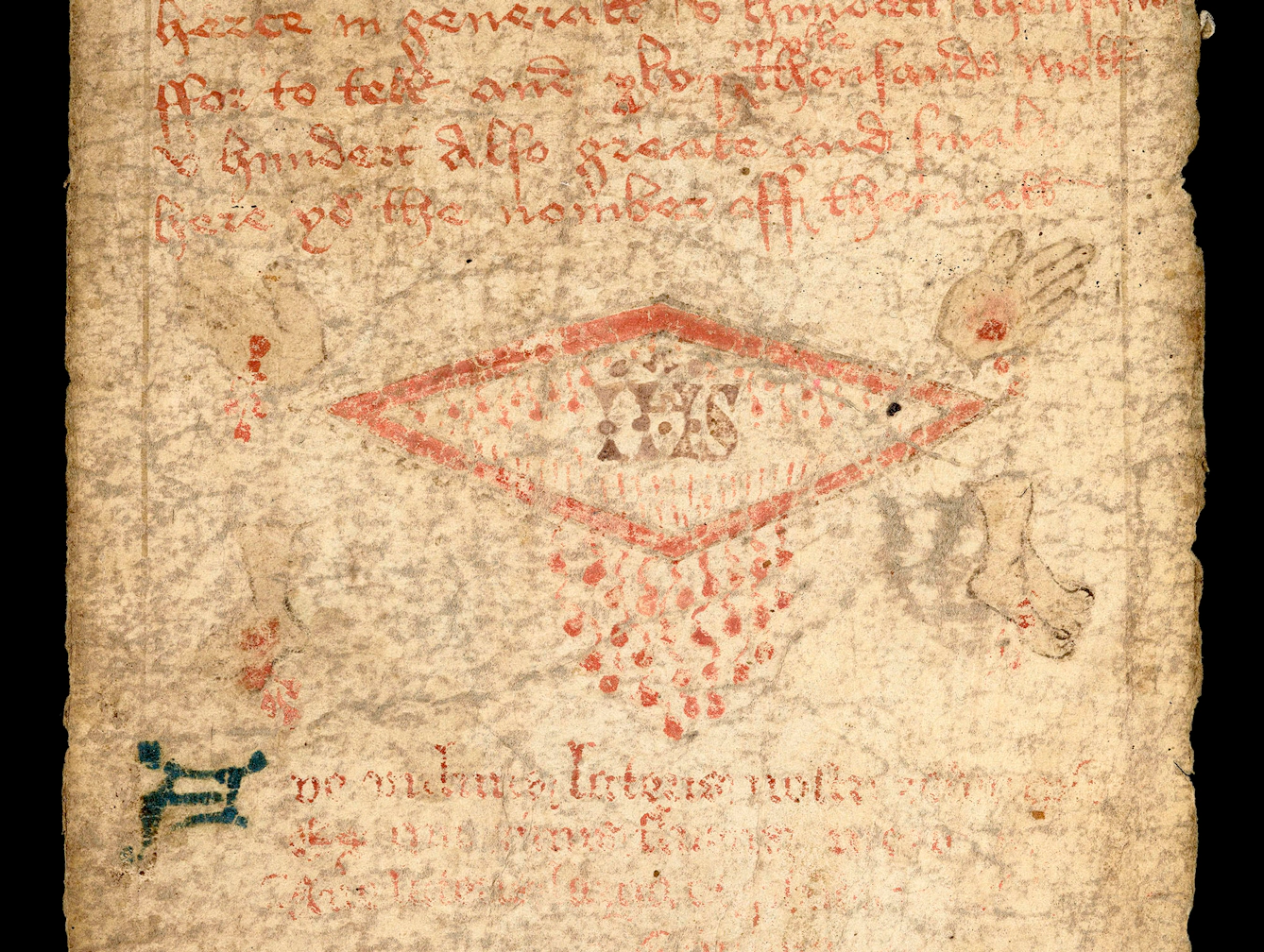
An image from the medieval birth scroll representing the stigmata on the hands of feet of Christ and the drops of blood falling from the central diamon. The image is badly worn from centuries of being handled and touched during countless births.
Counting the drops of Christ’s blood on a birth scroll to steady your breathing. One, two, three, four, five… the modern-day version of timing your contractions on an app in your phone, perhaps… one minute, two minutes, three, the counting itself giving you something to focus on, other than the pain.
And yet, in 2026 I find myself wondering how far we have really come in supporting women during pregnancy and childbirth. Counting. Breathing. Pushing. Praying.
Modern childbirth with a hope and a prayer
As part of my work as a global health journalist, I have travelled to many under-resourced parts of the world where the lives of mothers and their babies are still left to chance – shaped by where you live, how much money you have, and whether you can get to a hospital in time.
But even in the most advanced settings, the picture is more complicated than we might like to believe. Some of the tools we rely on today have changed little in centuries. Forceps – first developed over 400 years ago – were a remarkable breakthrough, saving countless mothers and babies. But their presence in modern delivery rooms, including my own, is also a reminder of how slowly innovation in maternal care progresses.
Even medical researchers suggest that there remains a serious drought in the development of medicines specifically for pregnancy, leaving doctors to rely on decades-old treatments. All this at a time when maternal deaths in the UK are higher than they were a decade ago, with Black women significantly more likely to die during pregnancy and childbirth than white women.
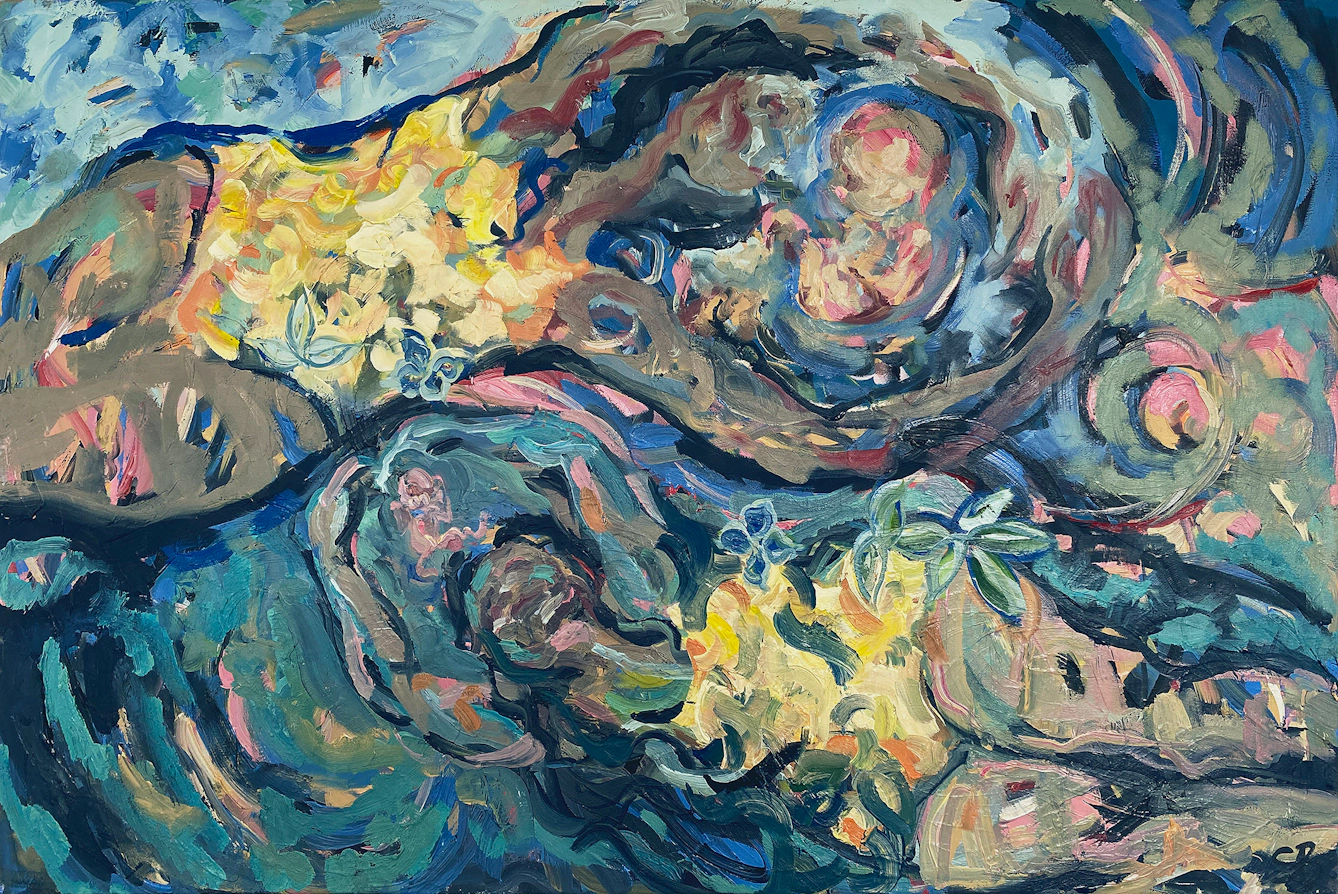
: 'Flutter of Life' from 'A life in the Womb', oil on canvas, 2024, Artist: Sue Bridge. Source: Sue Bridge. © Sue Bridge / Wellcome Collection.
'Flutter of life' is one of a series of works by Sue Bridge’s for a solo exhibition, called 'A life in the womb', which were a response to Tulip's experiences of childbirth and loss.
And yet there is reason for optimism. New technologies such as handheld ultrasound devices can allow a health worker with minimal training to quickly assess how a baby is growing and how far along a pregnancy is – information many women in low-income settings still never receive, but which can provide clear, actionable insight into when something is wrong and what to do next.
Other innovations focus on one of childbirth’s greatest dangers: bleeding. New tools can measure blood loss in real time, allowing life-saving treatment to begin sooner. In many hospitals today, blood loss is still estimated largely by eye – or by weighing blood-soaked sheets.
But even the best in modern medical care cannot guarantee or provide some things that are crucial and that women also need during pregnancy and childbirth. Things that the medieval birth scroll embodies: hope, faith, care, safety, solidarity.
About the contributors
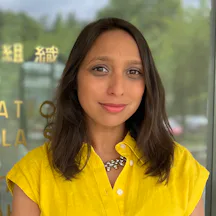
Tulip Mazumdar
Author
Tulip Mazumdar is a global health journalist who has reported extensively on women's health and miscarriage care around the world. She was the BBC's first Global Health Correspondent and now works as a freelance journalist, writer, presenter and moderator.

Sue Bridge
Illustrator
Sue Bridge is a painter and animator working in oils, gouache and moving image. Her practice explores themes of women’s health, wellbeing, and our primal bonds with the elements. Her work has been selected for exhibitions at Mall Galleries and Discerning Eye and is held by UCLH Arts Collection. Her animations have screened at Turner Contemporary and The Photographers’ Gallery, London.
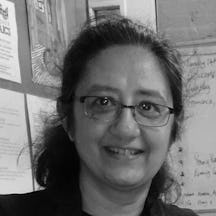
Lalita Kaplish
(she/her)
Commissioning editor
Lalita is a digital content editor at Wellcome Collection with particular interests in the histories of science and medicine and discovering hidden stories in our collections.